

Lower Back Pain: Causes, Treatment and Exercises for Relief

Updated: Aug 16

Lower back pain is one of the most common complaints and can affect people of almost any age. It may begin suddenly after lifting, exercising or an awkward movement, or gradually develop over time.
What causes lower back pain?
Muscle or ligament strains
Joint irritation or stiffness
Prolonged sitting
Changes in physical activity
Disc-related pain
Reduced hip or spinal mobility
Reduced muscular strength or endurance
Repetitive lifting or bending
In some cases, symptoms can also travel into the buttock, leg or foot.
Should you keep moving?
For most uncomplicated episodes of lower back pain, prolonged bed rest isn't recommended. Staying active within comfortable limits and gradually returning to normal activities can be an important part of recovery.
Exercise may include mobility, strengthening, aerobic exercise or movement-control exercises depending on the individual.
Can manual therapy help?
Clinical guidelines suggest that manual therapy, including mobilisation, manipulation or soft-tissue techniques, may be considered for lower back pain as part of a broader treatment program that includes exercise rather than as a stand-alone treatment.
Simple Exercises You Can Try for Lower Back Pain
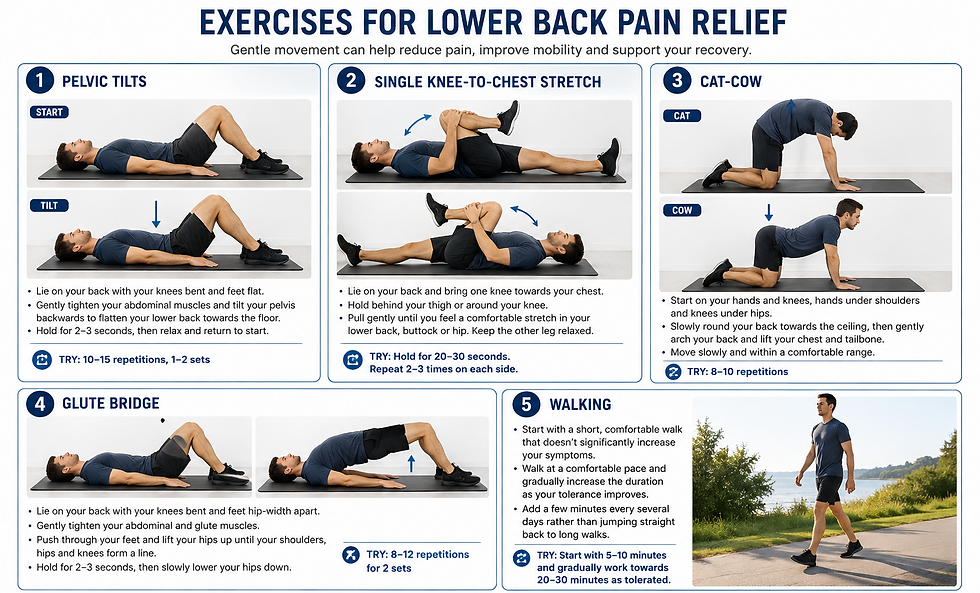
Gentle movement can be helpful for many people experiencing lower back pain. The best exercises will depend on what is causing your symptoms, but the following are some simple movements you can try at home.
How often should you do them?
Start gently and see how your body responds. These exercises can generally be performed once or twice per day when comfortable and may not be suitable for every type of lower back pain. Exercises should generally feel comfortable or produce only mild, temporary discomfort. Stop and seek professional advice if you develop significant worsening of pain, increasing pain travelling down the leg, new numbness or tingling, or weakness.
When should you seek medical attention?
Seek prompt medical assessment if back pain is associated with significant weakness, loss of bladder or bowel control, numbness around the groin, significant trauma, fever or unexplained weight loss.
At Evolution Body Therapy, we assess your movement, strength and individual aggravating factors before developing a management plan based on your needs and goals.


Comments